
Ceramic or Porcelain Tile: Which Is Right for You?
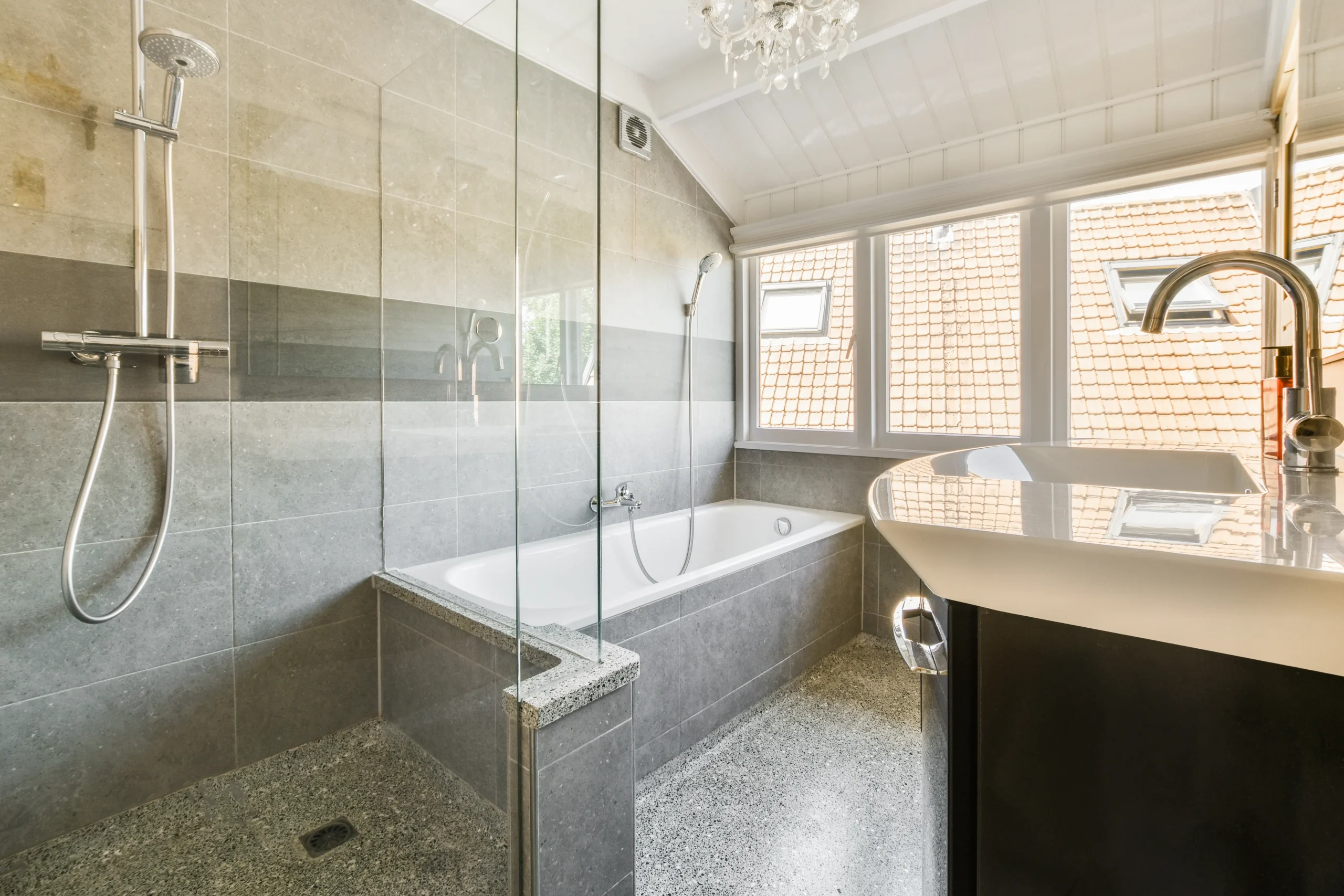
Stand in a tile showroom and ceramic and porcelain look like the same product at two different prices. They are not. They are made differently, they behave differently, and putting the wrong one in the wrong room is a mistake you will live with for a long time.
Here is the honest comparison.
What is actually different
Both are fired clay. The difference is density.
Porcelain is made from finer clay, fired hotter and longer. The result is a denser, harder tile that absorbs very little water. Ceramic is softer, more porous, and easier to work with.
That one difference is the source of every other difference between them.
Water resistance: porcelain wins, clearly
Because porcelain is so dense, it absorbs almost no water. That makes it the safer choice anywhere water is a regular presence: showers, bathroom floors, laundry rooms, entryways where wet boots land all winter.
Ceramic can absolutely be used in a bathroom, and it is used in bathrooms constantly. But it needs to be sealed properly and installed properly, and it has less margin for error.
For a shower specifically, we recommend porcelain almost every time.
Durability: porcelain again, especially underfoot
Porcelain’s density makes it harder and more resistant to chipping and wear. In a busy kitchen, a hallway, or an entry that takes real traffic, it holds up better over the years.
There is another advantage people rarely think about. Many porcelain tiles are the same color all the way through, so if one does chip, the damage is much less visible. A chipped ceramic tile shows its pale interior immediately.
Cost: ceramic wins
Ceramic is usually cheaper, and not just for materials. It is softer, so it is easier to cut and set, which means less labor.
Porcelain costs more up front and takes longer to install, because cutting it takes better blades and more patience.
That does not make ceramic the “budget” option in a bad sense. In the right room, it is simply the correct choice, and paying for porcelain would be paying for durability you will never use.
So which do you actually pick?
- Showers and wet areas → porcelain. This one is not really a debate.
- High-traffic floors (kitchen, hallway, entry) → porcelain.
- Backsplashes → ceramic is perfect. Nobody walks on a backsplash.
- Accent walls and low-traffic rooms → ceramic, and put the money you saved somewhere it matters.
- Bathroom floors → porcelain if the budget allows, ceramic if it does not, sealed properly.
The part that matters more than either choice
Here is the uncomfortable truth: a perfect porcelain tile installed badly will fail before a ceramic tile installed well.
The substrate has to be flat. If it is not, the tile will telegraph every dip, and grout lines will crack. Wet areas need proper waterproofing membrane underneath the tile, every time, no exceptions. The layout has to be planned first so the cuts land somewhere sensible. And the grout has to be sealed.
Choose the tile carefully. Then choose who sets it even more carefully.
Not sure? That is normal
We install both, and we will tell you which one belongs in your room instead of defaulting to whatever is in the truck. Sometimes the answer is porcelain in the bathroom and ceramic on the backsplash, in the same house, on the same day.
Get a free estimate, or read more about our tile installation services.
Frequently Asked Questions
-
Ceramic is usually more budget friendly, for both materials and installation, since it is softer and easier to cut and set.
-
Yes, when it is properly sealed and installed. But porcelain's higher water resistance makes it the safer pick for a shower.
-
Porcelain generally lasts longer in high-traffic and wet areas, thanks to its density. Both last for years when they are installed properly.
-
Density. Porcelain is fired hotter and longer, so it is harder and absorbs almost no water. Every other difference follows from that.
-
Yes. We install both across New Jersey for floors, bathrooms, kitchens, and showers, and we will help you choose room by room.